
Categories
Living in Glendora CaliforniaPublished August 20, 2026
A Self-Guided Historic Architecture Walking Tour of Glendora

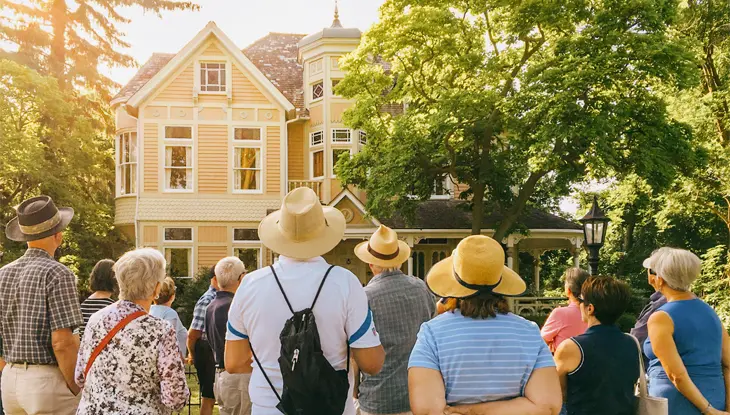
Glendora's residential streets tell a story that predates most of the San Gabriel Valley's postwar suburban growth, and Marcus and Helen Ibrahim often point new residents toward the city's older neighborhoods as a way to understand what makes Glendora feel different from its neighbors. A self-guided walk through these areas is one of the simplest ways to get oriented—no car, no fixed itinerary, just a morning and a pair of comfortable shoes, plus a little curiosity about what's in front of you.
Start in the Village
The Glendora Village grew up along a stretch of historic Route 66, and that heritage is part of the city's identity to this day—the alignment through Glendora is one of many California segments still referenced in Route 66 history and preservation efforts. The Village today mixes its early-20th-century commercial buildings with newer storefronts, and walking its main strip gives a sense of the small-town downtown scale that shaped the surrounding residential blocks in the decades since. It's worth pausing here before heading into the neighborhoods, since the Village's scale and pacing set a useful baseline for what came later as the city grew outward.
Wander the Neighborhoods Just North and South of the Village
Glendora's older residential pockets near the Village include a mix of Craftsman bungalows, Spanish Colonial Revival touches, and simple ranch homes built in later decades as the city filled in. Craftsman-era homes typically show low-pitched gable roofs, exposed rafter tails, wide front porches, and combinations of wood shingle and stone or brick detailing—features worth watching for as you walk. Because exact ages and architectural pedigrees vary house to house, the Glendora Community Development Department and the Glendora Historical Society are the right resources if you want to confirm the history of a specific property rather than guessing from the sidewalk.
As you move through these streets, notice how lot sizes and setbacks shift—older sections tend to have narrower lots with homes set close to the street, a pattern common in early-1900s subdivisions before car-oriented planning widened front yards and driveways. Compare that to blocks built a few decades later, where you'll typically see wider setbacks, attached garages, and more uniform lot shapes reflecting mid-century planning standards.
Look for the Small Details
Part of the appeal of a walking tour, versus a drive-by, is catching details easy to miss at 25 miles per hour: transom windows above front doors, decorative brackets under eaves, original wood siding versus later stucco additions, and mature trees planted when the homes were new. These details vary block by block, and no two Craftsman-era streets in Glendora look quite the same, which is part of what makes a slow walk more rewarding than a quick drive through.
Front porches deserve particular attention on a Craftsman-focused walk—many original porches have been enclosed or modified over the decades, so spotting one still largely intact, with its original columns and railings, is a small reward for paying close attention. Garden walls and low stone retaining walls along the sidewalk are another detail worth noticing, since many were built from local river rock and have held up remarkably well over the decades.
Rooflines are another giveaway worth training your eye on. Craftsman homes tend to favor low-pitched gables with broad overhangs, while later ranch-style infill on the same block often shows shallower rooflines and simpler eave details. Once you start noticing the difference, it becomes easy to date a block's construction era just by scanning the roofline down the street, even before looking at porch details or siding.
Bring Curiosity, Not Assumptions
It's worth remembering that a walking tour like this is about observation, not appraisal—admiring a home's architecture from the sidewalk is different from knowing its history, condition, or ownership. If a particular street or home catches your interest and you want to learn more about its background, the Glendora Historical Society maintains records and welcomes inquiries from residents and newcomers alike who want to dig deeper into a specific property or neighborhood's story.
Plan Your Route and Timing
Because this is a self-guided walk rather than a fixed route, plan your own path based on how much time you have and how far you want to cover on foot. Late morning on a weekend tends to offer good light for viewing architectural details and enough foot traffic in the Village to grab coffee or a bite before or after your walk. Comfortable shoes and sun protection matter more than mileage—there is no wrong way to do this, and doubling back to look at a house twice is entirely in the spirit of the exercise.
If walking these streets leaves you curious about what it would take to actually live on one of them, Marcus and Helen Ibrahim know Glendora's historic neighborhoods well and are happy to talk through what is currently available. Call (626) 605-1840 or visit www.teamibrahim.com anytime.

Marcus Ibrahim
Team Leader | Team Ibrahim | eXp Realty®
or another way